
How to Inspect a Used Pickup Truck Before Buying in Dallas, TexasKey Takeaways
- Inspect a used truck carefully because a clean exterior does not guarantee good mechanical condition.
- Verify the VIN, title status, mileage, vehicle history, and maintenance records before purchasing.
- Check the frame, underbody, bed, tires, suspension, brakes, engine, and drivetrain for signs of wear or damage.
- Pay attention to transmission behavior, warning lights, fluid leaks, unusual noises, and steering performance during the road test.
- Review lift kits, larger tires, and other modifications for installation quality and potential mechanical effects.
- Arrange an independent pre-purchase inspection, especially for expensive or heavily used trucks.
- Get repair estimates and factor upcoming maintenance into your price negotiations.
- Walk away if you discover serious structural damage, unresolved title issues, or major mechanical problems.
Buying a pickup in North Texas means looking beyond a shiny hood and clean interior. Dallas-area trucks may have spent their lives commuting on I-35, hauling equipment between job sites, towing boats toward nearby lakes, or working across dusty rural roads. If you are comparing second hand trucks, Dallas buyers should approach each vehicle with a careful, repeatable inspection process. A used truck can be a capable long-term purchase, but towing, hauling, off-road driving, and commercial use place demands on frames, suspensions, brakes, and drivetrains. A vehicle history report is useful, but it cannot confirm the truck’s current mechanical condition.
Why a Used Truck Inspection Matters
Trucks are built for demanding jobs, but that does not make them immune to wear and tear. A clean body can conceal rust on frame components, prior collision repairs, worn suspension parts, or transmission trouble. The goal is not to find a flawless older truck. It is to understand its actual condition, likely near-term costs, and whether its price fairly reflects those factors.
What to Do Before Visiting the Truck
Ask for the VIN, current mileage, asking price, service records, and clear photos before making the trip. Request pictures of the engine bay, tire tread, bed floor, hitch receiver, frame rails, and underbody. If possible, arrange to see the truck before it has been started that day. A cold start can reveal noises, smoke, or slow cranking that a warmed-up engine may hide. Bring a flashlight, gloves, a tire-pressure gauge, paper towels, and a notepad. Give yourself enough time to walk around the truck, inspect it underneath, drive it on both local roads and highways, and review the paperwork without pressure.
How to Review the Paperwork and Vehicle History
Match the VIN on the dashboard and driver-side door area to the title, registration, and service records. Review the title status carefully for salvage, rebuilt, flood, odometer, or lien concerns. Mileage entries should generally follow a sensible progression over time, not jump backward or show long unexplained gaps. Maintenance receipts can be especially valuable for oil changes, cooling-system repairs, brake work, tire replacement, and transmission service. The FTC advises buyers to obtain a vehicle history report, while also recognizing that a report does not replace an independent mechanical inspection.
How to Inspect the Exterior, Bed, and Frame
Look Beyond Paint and Panel Gaps
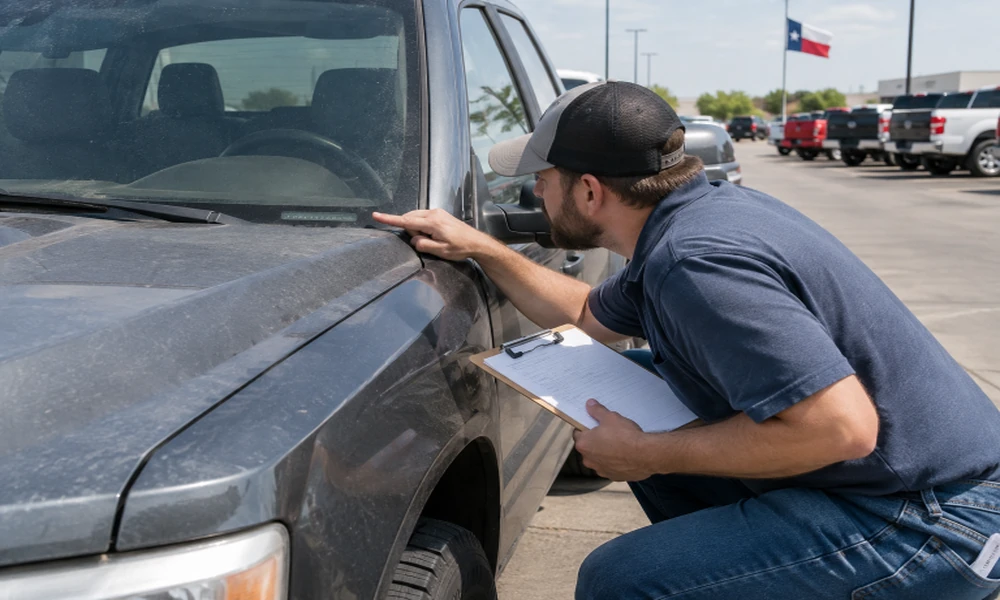
Walk around the truck in daylight. Look for mismatched paint, overspray on trim, uneven panel gaps, rippled metal, and doors or tailgates that do not close cleanly. These signs do not automatically rule out a purchase, but they justify questions about prior damage and repairs.
Inspect the Bed and Underside
Check the bed floor for deep dents, cracks, rust, and damaged tie-down points. Lift bed mats or inspect beneath removable liners when permitted. Underneath, examine frame rails, crossmembers, spring hangers, and the hitch area. Light surface rust may be manageable, but scaling corrosion, holes, cracks, bent rails, or unexplained welds deserve professional attention. Be cautious of fresh undercoating that makes important areas difficult to inspect.
How to Check the Engine and Drivetrain
Start the engine cold and listen for persistent knocking, rattling, loud ticking, or unusually long cranking. Check accessible fluid levels and look for wet spots around the engine, transmission, transfer case, differentials, and cooling hoses. During startup and acceleration, watch for excessive smoke or strong odors of fuel and coolant. Confirm that warning lights illuminate briefly during the key-on check and then turn off after startup. Test automatic transmissions for delayed engagement, harsh shifts, slipping, or shuddering. If the truck has four-wheel drive, engage the system according to the owner’s manual and verify that high and low ranges operate correctly. Diesel buyers should give added attention to turbo operation, emissions warnings, injector-related symptoms, and signs of excessive crankcase pressure.
How to Test the Suspension, Steering, and Brakes
Stand back and see whether the truck sits level. Uneven tire wear can point to alignment, steering, suspension, or tire-maintenance issues. Look for leaking shocks, damaged leaf springs, worn bushings, and corroded brake lines. During the drive, the steering should feel controlled rather than loose or wandering, and braking should be smooth without pulling, vibration, grinding, or an unusually soft pedal.
What to Watch for During the Road Test
- Begin at low speed with the radio off and listen for clunks, squeaks, or grinding.
- Accelerate gradually and note engine response and transmission behavior.
- Drive straight on a safe, level road and check for drifting or steering-wheel vibration.
- Apply the brakes progressively and pay attention to pulling or pedal pulsation.
- Drive at highway speed when practical, then park and check for fresh leaks or warning lights.
How to Evaluate Lift Kits and Other Modifications
Lift kits, leveling kits, larger tires, tuners, aftermarket wheels, and exhaust modifications can affect reliability, handling, and service needs. Ask who installed the parts and request receipts. Look for tire rubbing, uneven tread wear, loose wiring, poor driveshaft angles, stretched brake lines, or steering vibration. A professionally installed modification with documentation is different from an improvised repair with no supporting records.
When to Hire an Independent Mechanic
For a serious purchase, arrange a pre-purchase inspection with a mechanic of your choice. Select a shop familiar with pickups, four-wheel-drive systems, or diesel engines when appropriate. Ask for written findings, photos when available, and estimated repair priorities. A seller refusing a reasonable independent inspection is a meaningful warning sign.
Used Truck Red Flags That Should Stop the Deal
- VINs or title details that do not match.
- Structural rust, frame cracks, bent rails, or questionable welding.
- Overheating, major fluid leaks, heavy smoke, or loud internal engine noise.
- Transmission slipping, delayed engagement, or repeated warning lights.
- Unresolved salvage, flood, lien, or ownership concerns.
- Pressure to skip paperwork review, a road test, or an independent inspection.
How Inspection Results Can Shape the Price
Separate cosmetic imperfections from safety and mechanical needs. Obtain repair estimates for tires, brakes, suspension work, fluid service, batteries, or other known issues before discussing price. Check the VIN for outstanding safety campaigns through the NHTSA recall lookup tool, then factor all immediate expenses into the total ownership cost. If the repairs are extensive, uncertain, or safety-related, walking away can be the best decision.
Final Pre-Purchase Checklist
- Confirm that the VIN, title, and available records match.
- Review the vehicle history and maintenance documentation.
- Inspect the frame, bed, tires, suspension, brakes, engine, and drivetrain.
- Complete a thorough road test.
- Arrange an independent inspection when the purchase is significant.
- Make sure the final price accounts for known repairs and upcoming maintenance.
The best used pickup in Dallas is not necessarily the newest, cheapest, or most modified option. It is the one with verifiable documentation, sound fundamentals, and a condition that matches both its intended job and its final price.
Conclusion
Buying a used pickup in Dallas requires more than checking its appearance, mileage, and asking price. A thorough inspection should cover the truck’s paperwork, vehicle history, frame, engine, drivetrain, suspension, brakes, and overall road performance. Buyers should also pay attention to prior modifications and signs of heavy towing, hauling, or commercial use, which could affect long-term reliability. Reviewing maintenance records, checking for outstanding recalls, and arranging an independent mechanical inspection can provide a clearer picture of the vehicle’s actual condition. Any identified repairs should be factored into the final price, while serious structural or mechanical problems may warrant reconsidering the purchase. By following a consistent inspection process and avoiding pressure to rush the decision, Dallas buyers can find a used pickup that offers dependable performance, practical value, and the capability needed for everyday driving or demanding work.